Top 5 Signs Your Home Needs a Consumer Unit Upgrade
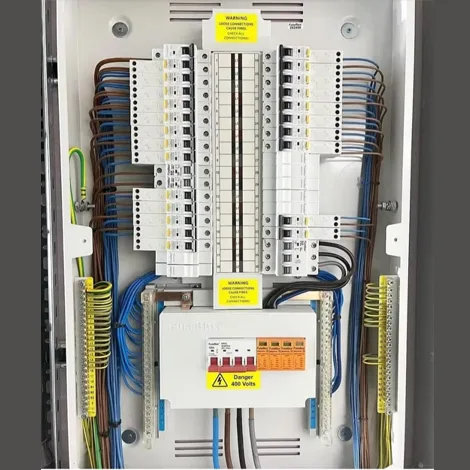
What’s The Difference Between A Consumer Unit And A Fuse Box?
Although they serve the same essential function, there are some very important differences between consumer units and fuse boxes that you should understand if you’re considering having one installed or replaced.
Fuse Boxes
A traditional fuse box was the standard way of distributing electricity around homes constructed in the early 20th century. They kept homes safe from electrical faults by using fuses – safety devices containing a small piece of wire that melts when the current exceeds a specific level, cutting off the electricity to the circuit and preventing damage.
After a fuse blows, it must either be replaced with another fuse with the same rating or (in the case of rewireable fuses) have its wire replaced to restore your fuse box to full function.
Consumer Units
Fuse boxes began to be phased out in the mid-20th century in favour of modern consumer units containing circuit breakers, which cut off electricity to the circuit more quickly and don’t need to be replaced after being tripped, as they can be safely reset. They offer better safety and functionality, and are compliant with modern wiring regulations.
If your home still has a fuse box, it’s recommended that you replace it with a modern consumer unit. Fuse boxes simply don’t offer the same level of protection and performance as their modern counterparts.
Most modern consumer units will contain the following safety features:
-
Main switch – this is your master control for all electricity entering the unit. It allows the electrical system to be safely isolated during emergencies or maintenance work.
-
Residual current devices (RCDs) – these immediately switch off the electricity if they detect a fault. They are designed to protect people from electric shocks and earth faults.
-
Circuit breakers – these devices break a circuit when tripped by short-circuit issues or power overloads. They switch off the current faster than traditional fuses, helping minimise damage to wiring and appliances.
-
Surge protective devices (SPD) – these protect circuits and equipment from high-voltage power surges, such as those caused by lightning.
-
Arc fault detection devices – these protect against arc faults, cutting off electricity when an arc fault is detected and preventing electrical fires.
In some consumer units, you might also find residual current circuit breakers with overcurrent protection (RCBO), which combine the functions of an RCD and a circuit breaker.
Popular Posts
18 November, 2026