What to Expect During an Electrical Inspection and Testing in Angus
Highlights:
-
Electrical inspections identify hidden hazards and help prevent fires, electric shocks, and equipment failures.
-
Professional electricians assess wiring, outlets, panels, and safety devices for potential faults.
-
Specialised testing equipment helps verify electrical installations meet relevant safety standards.
-
Inspections are essential when buying, selling, renovating, or maintaining older properties.
Electrical safety is an important part of maintaining a secure and comfortable property. Your electrical systems can develop faults over time due to ageing, regular use, poor installation, or damaged components. If the issues remain unnoticed, they can cause serious problems later. This is where electrical inspection and testing in Angus take place to prevent electrical fires, shocks, and other dangers from faulty wiring, outdated systems, poorly executed electrical work, or unsafe electrical installations.
A professional service needs a well-laid-out approach to assess the electrical system of your property. As a property owner, you should know what happens during this process to prepare well and understand its value. In this blog, we will explore what exactly happens during this inspection and when you need one.
What Is Electrical Inspection and Testing
Electrical inspection and testing involve checking the condition, performance, and safety of the electrical installations of your property. It gives you a full picture of your property’s electrical systems to ensure safety, functionality, and compliance with relevant codes and standards.
Expert electrical testing helps spot potential electrical hazards before they lead to serious problems like electrical fires, shocks, or equipment failures. Once the inspection is complete, NICEIC-registered electricians in Angus provide a report explaining the findings and highlighting any necessary improvements or repairs.
What Happens During Electrical Inspection and Testing
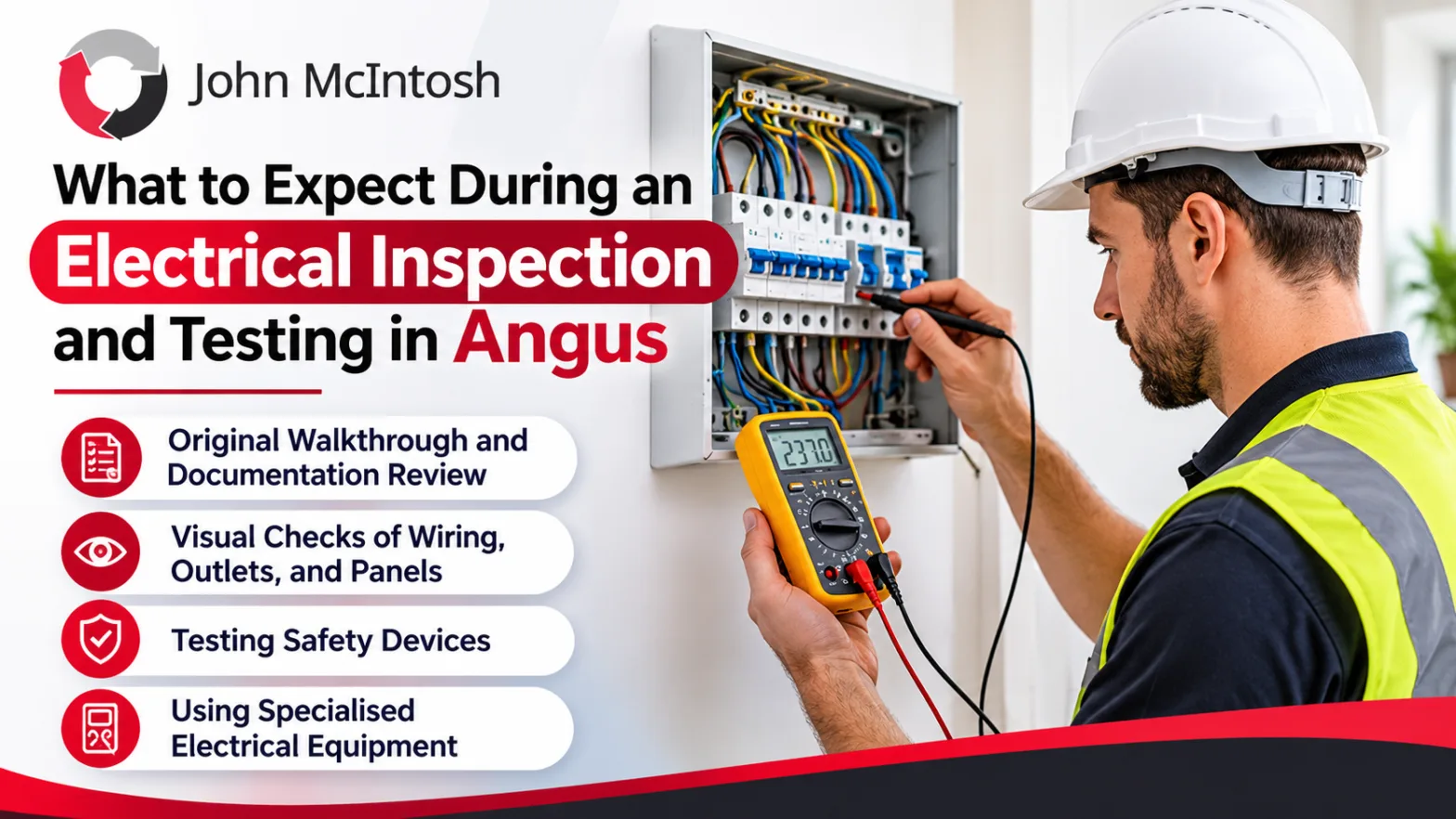
Original Walkthrough and Documentation Review
The inspection starts with a complete risk assessment of the environment. Our dedicated team collects documentation about your property’s electrical history, previous inspections, and system modifications. It helps us customise the inspection to address specific concerns and potential weak points. We also need to check if electrical components are accessible, as blocked pathways can slow down the process and prevent a proper assessment.
Visual Checks of Wiring, Outlets, and Panels
Visual inspection is the most significant phase. It can detect more than 90% of electrical defects. We systematically look for physical damage, exposed or frayed wiring, signs of overheating or corrosion, proper labelling, adequate clearances and appropriate environmental conditions. We also verify proper wire insulation, which creates a vital barrier between live wires and people.
Testing Safety Devices
Safety devices such as circuit breakers and residual current devices (RCDs) are essential for protecting against electrical hazards in the homes and workplaces of Angus. These components help protect people and property from electrical faults, electric shocks, and potential fire hazards.
Using Specialised Electrical Equipment
Experts use specialised equipment to find issues that are not visible to the naked eye. These tests provide a clearer understanding of whether the installation meets the relevant electrical safety standards.
When You Might Need One
-
Buying or Selling a Home: An inspection can help to assess the condition of its electrical system and highlight potential repairs that may need attention.
-
New Installations or After Renovations: After installing new electrical equipment or completing major renovations, our reliable electrical services confirm that the electrical work has been completed safely and correctly.
-
Outdated Wiring: Deteriorating wiring, outdated consumer units, or installations that no longer meet current safety standards. Professional inspection helps identify these concerns.
-
Legal Requirements: Electrical safety inspections are also important for meeting property-related regulations. You need to keep electrical systems safe in rental properties with expert inspection and testing.
Electrical inspections are vital safeguards that protect against hidden hazards in property wiring systems. Choosing our qualified professionals also helps you understand the hidden risks of hiring a non-NICEIC electrician. We are ready to help you maintain a safer property. Contact us for dependable electrical work.
Popular Posts

13 September, 2000